


Wine cathedrals
The Wine Cathedrals of Terra Alta, the fruit of union. Symbol of strength
The wine cathedrals are aesthetically based on Modernisme but functionally on Noucentisme. They are designed to optimise the productivity and quality of the wine. Beyond their architecture, therefore, they are the most important examples of industrial engineering in the rural world.

Origins
The modernist wineries of Terra Alta are the result of the response to the phylloxera crisis, which devastated the Catalan vineyards at the end of the 19th century and caused mass emigration to the cities. Instead of giving up, the farmers of Terra Alta chose to work together through cooperativism, pooling production and associated services.
This cooperativism revolutionised the Catalan countryside and made possible the creation of modernist wineries, which Àngel Guimerà called "wine cathedrals" for their majesty and resemblance to religious temples. Modernisme came to the countryside as a symbol of the new strength and unity of the winegrowers.
Cèsar Martinell, a disciple of Domènech i Montaner and Antoni Gaudí, was the key architect in the construction of these wineries, becoming a leading figure of Modernisme in wine architecture.
Architects
Cèsar Martinell, with the collaboration of Pere Domènech i Roura, was an exceptional and practical architect. He identified opportunities in the rural world and learned to make wine in order to optimise the space in the wineries. He surrounded himself with experts to design the production process, taking into account both the technique and the social context and cooperativism.
With his wine cathedrals as a reference, Martinell returned to the city to build urban palaces, showing great practical sense. His work balances utility, economy and aesthetics: he used local materials such as brick and tile, and embellished the buildings with tiles and ceramics.
Influenced by Gaudí, he applied parabolic arches, openings in the spandrels and Catalan vaults. His agrarian architecture stands out as a "total project", meticulously designed to optimise every aspect of the production process, from the shape of the tanks to the ventilation and the layout of the machinery.
The cathedrals
In Terra Alta, in southern Catalonia, two examples of Modernisme stand out: the cooperative wineries of Gandesa and El Pinell de Brai, masterpieces by Cèsar Martinell. Both buildings, despite their differences, share a design that optimises space to produce quality wine.
The wineries are distinguished by their Gaudí-inspired parabolic and catenary arches, which seem to defy gravity, and by the spandrels, with slender, light pillars. Martinell incorporated Catalan vaults beneath the vats to insulate the must and make cleaning easier.
Brick, tile and render are the predominant materials, embellished with greenish tiles and ceramics by Xavier Nogués. These works are not only examples of architectural sustainability but also symbols of the rebirth of Terra Alta, reflecting the effort of a generation to build its future despite adversity.
Cèsar Martinell i Brunet
Cèsar Martinell, a Catalan architect and disciple of Gaudí, created the wine cathedrals, combining modernist aesthetics and agrarian functionality.
Cèsar Martinell i Brunet (1888-1973) was a Catalan architect, art historian and theorist, born in Valls. He studied at the Barcelona School of Architecture, where he was strongly influenced by Antoni Gaudí, with whom he collaborated during his early professional years. Martinell is best known for the construction of cooperative wineries, or "wine cathedrals", emblematic buildings that represent the modernisation of Catalan agrarian architecture in the early 20th century. These buildings stand out for their combination of functionality and beauty, with an intelligent use of local materials such as brick and stone. Martinell also contributed significantly to the preservation and dissemination of Catalan architectural heritage through his writings and research, leaving a legacy deeply rooted in the culture and architecture of Catalonia.
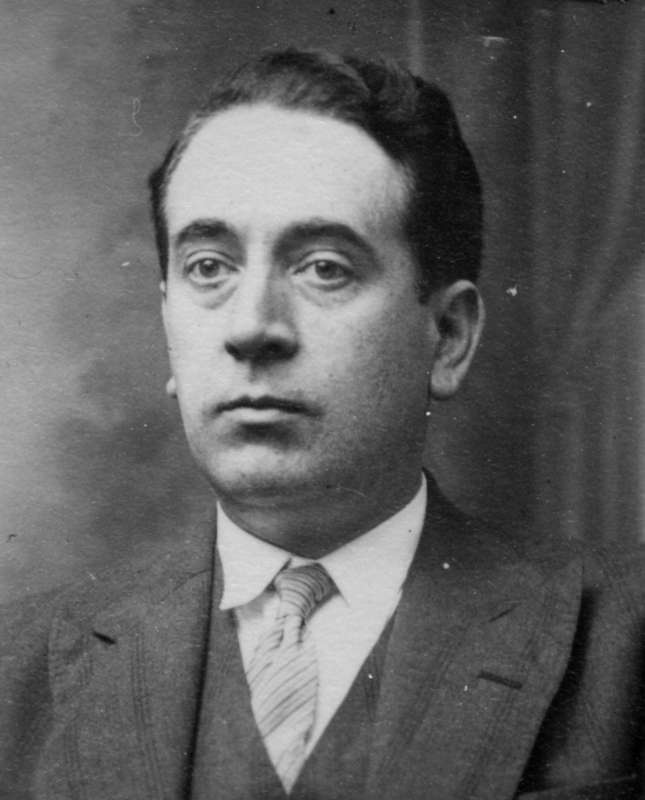

Pere Domènech i Roura
Pere Domènech i Roura, a Catalan architect, is known for his modernist and noucentista work, including the cooperative wineries of El Pinell de Brai and Gandesa.
Pere Domènech i Roura (1881-1962) was a Catalan architect who moved between Modernisme and Noucentisme, following in the footsteps of his father, Lluís Domènech i Montaner. He was responsible for completing the Palau de la Música Catalana and designed several outstanding cooperative wineries, such as the Cooperative Winery of L'Espluga de Francolí and the Cooperative Winery of Santes Creus. He also created the wine cathedrals of Gandesa and El Pinell de Brai, both emblematic examples of his combination of modernist aesthetics and practical functionality in agrarian architecture.
Pinell de Brai
The wine cathedral of El Pinell de Brai is a modernist building commissioned from Cèsar Martinell and Pere Domènech i Roura. Completed in 1920, it is listed as a Cultural Asset of National Interest by the Government of Catalonia.

Gandesa
The wine cathedral of Gandesa is a modernist building by the architect Cèsar Martinell i Brunet. Completed in 1920, it is listed as a Cultural Asset of National Interest by the Government of Catalonia, and was chosen as one of the Seven Wonders of Catalonia in 2007.
